Buying
How many kilometres is too many for a used car?
There's no magic number where a car goes from good buy to bad buy. A well-maintained car with 200,000 km can be a better purchase than a neglected one with 90,000. What matters is how those kilometres were put on, what has already been replaced, and whether the price reflects what's coming due next.
Short answer: Judge kilometres against the car's age, then against its maintenance records. A Canadian light vehicle has historically averaged about 16,000 km a year, so anything near that pace is normal. Past 150,000 to 200,000 km, expect to replace wear parts soon and make sure the price leaves room for them.
What counts as normal kilometres in Canada
The best national benchmark comes from Statistics Canada's Canadian Vehicle Survey, which found that light vehicles averaged 16,015 km in 2006, or about 44 km a day. The figure varied a lot by province, from roughly 12,000 km in British Columbia to over 18,500 km in New Brunswick. It's an older survey, but it gives a reasonable yardstick.
So a simple check: multiply the car's age by 16,000.
| Car's age | Around average | Low | High |
|---|---|---|---|
| 5 years | 80,000 km | under 60,000 km | over 110,000 km |
| 8 years | 128,000 km | under 100,000 km | over 160,000 km |
| 10 years | 160,000 km | under 120,000 km | over 200,000 km |
| 12 years | 192,000 km | under 150,000 km | over 240,000 km |
The low and high bands are rough guides, not rules. A GTA commuter driving the 400 to downtown every day can easily run well above average without hurting the car.
Kilometres vs age vs maintenance
Think of a used car's condition as three dials.
Kilometres wear the parts that move: engine internals, transmission, suspension, wheel bearings, brakes.
Age wears the parts that sit: rubber seals, hoses, belts, tires, batteries, and anything that rusts. A 12-year-old car with 70,000 km still has 12-year-old rubber and 12 Ontario winters of road salt underneath.
Maintenance decides how well both held up. Oil changes on schedule, transmission and coolant services, and repairs done properly when something failed matter more than the odometer.
Highway km vs city km
Highway driving is easier on a car than the same distance in the city. At a steady speed the engine runs at a stable temperature, the transmission rarely shifts and the brakes barely work. Short city trips do the opposite: lots of cold starts, constant shifting and braking, and engines that may never fully warm up in winter. A car with 180,000 mostly highway kilometres can be in better shape than one with 110,000 km of short hops.
You can't always tell which you're looking at, but clues help: brake and suspension condition, the history report's registration locations, and service records showing where and how often the car was maintained.
What tends to need attention at 150,000 and 200,000 km
Every model is different, so the owner's manual and service schedule are the real source. But by these distances, many cars are due, or overdue, for some of the following.
Around 150,000 km
- Timing belt and water pump, on engines that use a belt (many newer engines use a timing chain instead; check which one the car has)
- Spark plugs, if not already done at the manual's interval
- Transmission fluid service, if the manufacturer calls for one
- Shocks or struts, plus suspension bushings and sway bar links
- Brake rotors as well as pads, and brake fluid
- Coolant flush and a close look at radiator and heater hoses
- Battery, if it's the original or several years old
Around 200,000 km and beyond
- Wheel bearings and CV axles
- Engine and transmission mounts
- Alternator, starter and A/C compressor are more likely to wear out
- Exhaust components, especially on cars that have seen a lot of Ontario salt
- Oil consumption and seals: some engines start using or leaking a bit of oil
None of these is a reason to walk away. They're a reason to ask, "Has this been done?" If the answer is yes with receipts, that's real value. If no, it's money you'll spend soon.
Which cars handle high kilometres best
There isn't a single list that holds true across every model year, so be careful with blanket claims. A few general patterns are worth knowing:
- Simpler drivetrains have fewer expensive parts to fail. A naturally aspirated engine with a conventional automatic has less to go wrong than a high-output turbo engine with a complex transmission.
- Popular models tend to have cheaper, easier-to-find parts and more mechanics who know them well.
- Body-on-frame trucks and large SUVs are built for heavier work, but they're also heavier on brakes, tires and suspension. Check the frame closely for rust.
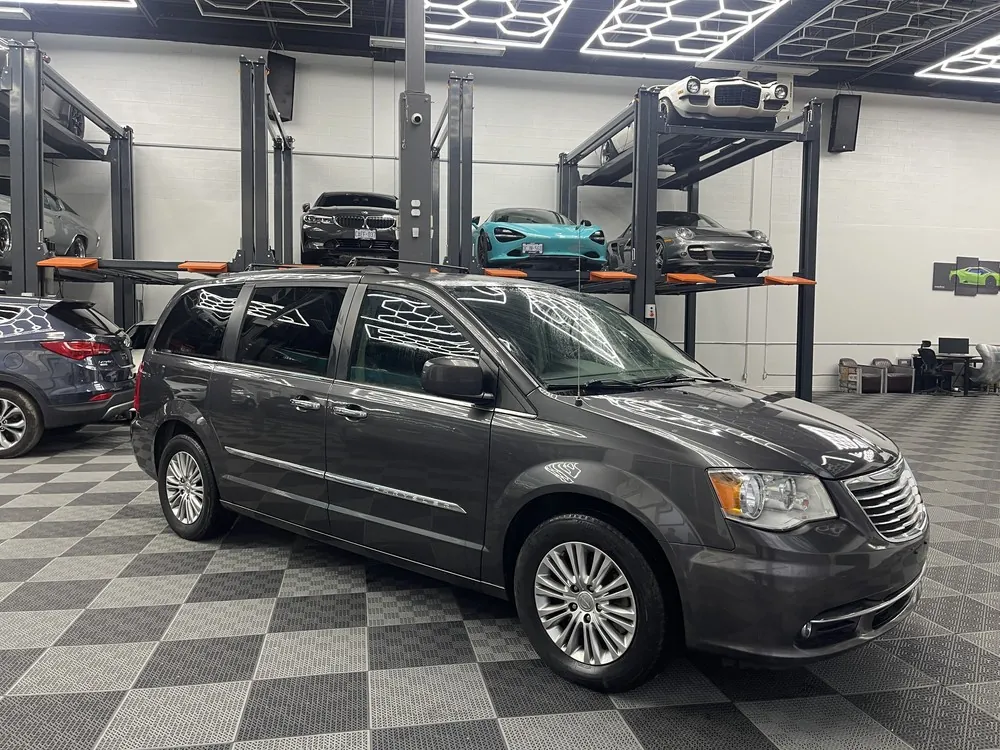
- Minivans and family SUVs often rack up highway kilometres on road trips, which is easy mileage, but check the interior and sliding-door hardware for family wear and tear.
- Hybrids can be good high-km buys because the electric motor takes some load off the engine and regenerative braking saves brake wear. The big question is the high-voltage battery. Ask for its service history and check what, if anything, remains of the manufacturer's hybrid warranty, since terms vary by brand.
- Luxury cars with lots of electronics can be wonderful to drive at 180,000 km, but repairs cost more. Budget accordingly.
The specific model matters more than the category. Check recalls on Transport Canada's recall database, and read up on known issues for that exact model year and engine before you decide.
How to check a high-km car before buying
- Pull the history report. It should show consistent odometer readings over time. A number that drops or stalls is a red flag. Our CARFAX Canada guide explains what to look for.
- Ask for service records. Receipts, a stamped maintenance booklet or a dealer service printout. Gaps of several years with no record are worth asking about.
- Test drive it properly. Use our test drive checklist, with a cold start and a highway run.
- Get a pre-purchase inspection. Ask the mechanic specifically about the items above and to quote anything that's due.
- Read the dealer's disclosures. In Ontario, a registered dealer must disclose the total distance driven, or state in writing that it's unknown and may be higher than the odometer shows.
How to price kilometres into the deal
High kilometres should mean a lower price. The question is whether it's low enough.
- Compare like with like. Find the same model, year and trim with average kilometres and note the price difference. That gap is what the market charges for the extra distance.
- Get the upcoming maintenance quoted. If the car is due for $1,800 of suspension and brake work, that money is part of the purchase price whether you pay it now or in six months.
- Credit what's been done. A high-km car with a recent timing belt, new tires and fresh brakes may be worth more than a lower-km car about to need all three.
- Think about how long you'll keep it. If you'll drive it another three years and 50,000 km, a high-km car at the right price makes sense. If you want ten more years, start with fewer kilometres.
- Remember resale and trade-in. You'll eventually sell a car that has even more kilometres on it. That's fine, as long as you paid accordingly.
High-km cars are often where budget buyers find the best value; a lot of what's listed as used cars under $10,000 falls into this group. If you're financing an older, higher-km car, keep the term short enough that you aren't still paying for it after the major repairs start.
Your next step
Use the age-times-16,000 check, ask for the records, and let the price do the rest. If you'd like to compare high- and low-kilometre cars side by side, Flat 6ix Club's indoor showroom at 190 Millway Ave, Vaughan, near Vaughan Metropolitan Centre subway, is open Monday to Friday, 9am to 9pm. Prices are plus HST and licensing, trade-ins are welcome, and delivery is available. Browse the current inventory, check what your current car is worth on the sell your car page, or call (416) 999-5939.
Common questions
Is 200,000 km too much for a used car?
Not automatically. A car at 200,000 km with full service records, a recent timing belt or chain inspection, good brakes and solid suspension can serve well for years. Without records, assume several major wear items are due and make sure the price reflects it.
Is it better to buy an older car with low km or a newer car with high km?
Usually the newer car with high, mostly highway kilometres is the safer bet, especially in Ontario where age brings rust and dried-out rubber. But a low-km older car that's been garaged and maintained can also be a good buy. Inspect both underneath before deciding.
What is the average kilometres per year in Canada?
Statistics Canada's Canadian Vehicle Survey found light vehicles averaged 16,015 km in 2006, with large differences between provinces. The survey is dated, but roughly 16,000 km a year is still a reasonable benchmark for judging whether a car's kilometres are high or low for its age.
How do I know the odometer reading is real?
Check that the readings on the history report and service records climb steadily over time, and compare wear on the pedals, seat and steering wheel with the kilometres shown. In Ontario, a registered dealer must disclose in writing if the odometer has been replaced, rolled back or isn't working, and you can cancel within 90 days of delivery if the dealer failed to disclose the actual distance travelled.